Brand Name

Empliciti

Generic Name
Elotuzumab
View Brand Information
FDA approval date: November 30, 2015
Classification: SLAMF7-directed Immunostimulatory Antibody
Form: Injection

What is Empliciti (Elotuzumab)?

EMPLICITI is indicated in combination with lenalidomide and dexamethasone for the treatment of adult patients with multiple myeloma who have received one to three prior therapies., EMPLICITI is indicated in combination with pomalidomide and dexamethasone for the treatment of adult patients with multiple myeloma who have received at least two prior therapies including lenalidomide and a proteasome inhibitor. EMPLICITI is a SLAMF7-directed immunostimulatory antibody indicated in, combination with lenalidomide and dexamethasone for the treatment of adult patients with multiple myeloma who have received one to three prior therapies., combination with pomalidomide and dexamethasone for the treatment of adult patients with multiple myeloma who have received at least two prior therapies including lenalidomide and a proteasome inhibitor.

Approved To Treat

Save this treatment for later
Sign Up
Not sure about your diagnosis?
Check Your Symptoms

Related Clinical Trials

A PHASE 3, OPEN-LABEL STUDY OF ELRANATAMAB MONOTHERAPY VERSUS ELOTUZUMAB, POMALIDOMIDE, DEXAMETHASONE (EPd) OR POMALIDOMIDE, BORTEZOMIB, DEXAMETHASONE (PVd) OR CARFILZOMIB, DEXAMETHASONE (Kd) IN PARTICIPANTS WITH RELAPSED/REFRACTORY MULTIPLE MYELOMA WHO RECEIVED PRIOR ANTI-CD38 DIRECTED THERAPY

Summary: The purpose of this study is to learn about the study medicine called elranatamab.This study aims to compare elranatamab to other medicines for the treatment of MM (a type of cancer). This study is seeking participants who: * Are 18 years of age or older and have MM. * Have received treatments before for MM. * Have MM that has returned or not responded to their most recent treatment. Half of the p...

A Phase I/II Study of Elotuzumab and Iberdomide and Dexamethasone Post Idecabtagene Vicleucel in Relapsed and Refractory Multiple Myeloma

Summary: The aim of this research study is to evaluate the efficacy of Elotuzumab and Iberdomide therapy post-Idecabtagene Vicleucel in participants with relapsed and refractory multiple myeloma. The names of the study drugs involved in this study are: * Iberdomide (a type of cereblon E3 ligase modulator) * Elotuzumab (a type of monoclonal antibody) * Dexamethasone (a type of steroid)

Brand Information

EMPLICITI (elotuzumab)
1INDICATIONS AND USAGE
  • EMPLICITI is indicated in combination with lenalidomide and dexamethasone for the treatment of adult patients with multiple myeloma who have received one to three prior therapies.
  • EMPLICITI is indicated in combination with pomalidomide and dexamethasone for the treatment of adult patients with multiple myeloma who have received at least two prior therapies including lenalidomide and a proteasome inhibitor.
2DOSAGE FORMS AND STRENGTHS
For injection: 300 mg or 400 mg of elotuzumab as a white to off-white lyophilized powder in a single-dose vial for reconstitution.
3CONTRAINDICATIONS
None.
4ADVERSE REACTIONS
The following clinically significant adverse reactions are described in detail in other sections of the label:
  • Infusion reaction
  • Infections
  • Second Primary Malignancies [
  • Hepatotoxicity
  • Interference with determination of complete response
4.1Clinical Trials Experience
Because clinical trials are conducted under widely varying conditions, adverse reaction rates observed in the clinical trials of a drug cannot be directly compared to rates in the clinical trials of another drug and may not reflect the rates observed in practice.
EMPLICITI in Combination with Lenalidomide and Dexamethasone [ELOQUENT-2]
The safety data described in this section are based on the ELOQUENT-2 study, a randomized, open-label clinical trial in patients with previously treated multiple myeloma. In ELOQUENT-2, EMPLICITI 10 mg/kg was administered with lenalidomide and dexamethasone
The mean age of the population was 66 years and 57% of patients were 65 years of age or older. Sixty percent (60%) of the population were male, 84% were white, 10% were Asian, and 4% were black. The Eastern Cooperative Oncology Group (ECOG) performance status was 0 in 47%, 1 in 44%, and 2 in 9% of patients.
These data reflect exposure of 318 patients to EMPLICITI and 317 to control with a median number of cycles of 19 for EMPLICITI and 14 for control.
Serious adverse reactions were reported in 65% of patients treated on the EMPLICITI arm and 57% for patients treated on the control arm. The most frequent serious adverse reactions in the EMPLICITI arm compared to the control arm were: pneumonia (15% vs. 11%), pyrexia (7% vs. 5%), respiratory tract infection (3.1% vs. 1.3%), anemia (2.8% vs. 1.9%), pulmonary embolism (3.1% vs. 2.5%), and acute renal failure (2.5% vs. 1.9%).
The proportion of patients who discontinued any component of the treatment regimen due to adverse reactions as listed below was similar for both treatment arms; 6.0% for patients treated on the EMPLICITI arm and 6.3% for patients treated on the control.
Adverse reactions occurring at a frequency of 10% or higher in the EMPLICITI arm and 5% or higher than the lenalidomide and dexamethasone arm for the randomized trial in multiple myeloma are presented in Table 6.
Laboratory abnormalities worsening from baseline and occurring at a frequency of 10% or higher in the EMPLICITI group and 5% or higher than the lenalidomide and dexamethasone group (criteria met for all Grades or Grade 3/4) for ELOQUENT-2 are presented in Table 7.
Vital sign abnormalities were assessed by treatment arm for the randomized trial in multiple myeloma and are presented in Table 8. Percentages are based on patients who had at least one vital sign abnormality any time during the course of study.
EMPLICITI in Combination with Pomalidomide and Dexamethasone [ELOQUENT-3]
The safety data described in this section are based on ELOQUENT-3, a randomized, open-label clinical trial in patients with previously treated multiple myeloma. In ELOQUENT-3, EMPLICITI 10 mg/kg and 20 mg/kg was administered with pomalidomide and dexamethasone
The mean age of the population was 66 years and 63% of patients were 65 years of age or older. Fifty-seven percent of the population were male, 78% were white, 20% were Asian, and none were black. The ECOG performance status was 0 in 43%, 1 in 46%, and 2 in 10% of patients. These data reflect exposure of 60 patients to EMPLICITI and 55 to control with a median number of cycles of 9 for EMPLICITI and 5 for control.
Serious adverse reactions were reported in 70% of patients treated on the EMPLICITI arm and 60% for patients treated on the control arm. The most frequent serious adverse reactions in the EMPLICITI arm compared to the control arm were: pneumonia (13% vs. 11%) and respiratory tract infection (7% vs. 3.6%). The proportion of patients who discontinued any component of the treatment regimen due to adverse reactions were 5% of the patients in the EMPLICITI arm and 1.8% of the patients in the control arm.
Adverse reactions occurring at a frequency of 10% or higher in the EMPLICITI arm and 5% or higher than the pomalidomide and dexamethasone arm for the randomized trial in multiple myeloma are presented in Table 9.
Other clinically important adverse reactions reported in patients treated with EMPLICITI that did not meet the criteria for inclusion in Table 6 and 9 but occurred at a frequency of 5% or greater in the EMPLICITI group and at a frequency at least twice the control rate for the randomized trial in multiple myeloma are listed below:
General disorders and administration site conditions: chest pain, night sweats
Immune system disorders: hypersensitivity
Nervous system disorders: hypoesthesia
Psychiatric disorders: mood altered
Laboratory abnormalities worsening from baseline and occurring at a frequency of 10% or higher in ELOQUENT-3 in the EMPLICITI group and 5% or higher than the pomalidomide and dexamethasone group (criteria met for all Grades or Grade 3/4) for the randomized trial in multiple myeloma are presented in Table 10.
Vital sign abnormalities were assessed by treatment arm for the randomized trial in multiple myeloma and are presented in Table 11. Percentages are based on all treated patients
4.2Immunogenicity
As with all therapeutic proteins, there is a potential for immunogenicity to EMPLICITI. The detection of antibody formation is highly dependent on the sensitivity and specificity of the assay. Additionally, the observed incidence of antibody (including neutralizing antibody) positivity in an assay may be influenced by several factors including assay methodology, sample handling, timing of sample collection, concomitant medications, and underlying disease. For these reasons, comparison of incidence of antibodies to EMPLICITI in the studies described below with the incidences of antibodies in other studies or to other products may be misleading.
Of 390 patients across four clinical studies including ELOQUENT-2 and in 53 patients in the ELOQUENT-3 trial, who were treated with EMPLICITI and evaluable for the presence of anti-product antibodies, 72 patients (18.5%) in the four clinical trials and 19 patients (36%) in the ELOQUENT-3 trial tested positive for treatment-emergent anti-product antibodies by an electrochemiluminescent (ECL) assay. In 63 (88%) of the 72 patients in the four clinical trials, anti-product antibodies occurred within the first 2 months of the initiation of EMPLICITI treatment and resolved by 2 to 4 months in 49 (78%) patients. In the ELOQUENT-3 trial, in all 19 patients, anti-product antibodies occurred within the first 2 months of the initiation of EMPLICITI treatment and were resolved by 2 to 3 months in 18 (95%) patients.
Neutralizing antibodies post-treatment were detected in 19 of 299 patients in the four clinical trials and 2 of 53 patients in the ELOQUENT-3 trial who were evaluable for the presence of neutralizing antibodies.
5OVERDOSAGE
The dose of EMPLICITI at which severe toxicity occurs is not known. EMPLICITI does not appear to be removed by dialysis as determined in a study of patients with renal impairment.
In case of overdosage, monitor patients closely for signs or symptoms of adverse reactions and institute appropriate symptomatic treatment.
6DESCRIPTION
Elotuzumab is a humanized recombinant monoclonal antibody directed to SLAMF7, a cell surface glycoprotein. Elotuzumab consists of the complementary determining regions (CDR) of the mouse antibody, MuLuc63, grafted onto human IgG1 heavy and kappa light chain frameworks. Elotuzumab is produced in NS0 cells by recombinant DNA technology. Elotuzumab has a theoretical mass of 148.1 kDa for the intact antibody.
EMPLICITI (elotuzumab) is a sterile, nonpyrogenic, preservative-free lyophilized powder that is white to off-white, whole or fragmented cake in single-dose vials. EMPLICITI for Injection is supplied as 300 mg per vial and 400 mg per vial and requires reconstitution with Sterile Water for Injection, USP (13 mL and 17 mL, respectively) to obtain a solution with a concentration of 25 mg/mL. After reconstitution, each vial contains overfill to allow for withdrawal of 12 mL (300 mg) and 16 mL (400 mg). The reconstituted solution is colorless to slightly yellow, clear to slightly opalescent. Prior to intravenous infusion, the reconstituted solution is diluted with either 0.9% Sodium Chloride Injection, USP or 5% Dextrose Injection, USP
Each 300 mg single-dose vial of EMPLICITI also contains the following inactive ingredients: citric acid monohydrate (2.44 mg), polysorbate 80 (3.4 mg), sodium citrate (16.6 mg), and sucrose (510 mg).
Each 400 mg single-dose vial of EMPLICITI also contains the following inactive ingredients: citric acid monohydrate (3.17 mg), polysorbate 80 (4.4 mg), sodium citrate (21.5 mg), and sucrose (660 mg).
7CLINICAL STUDIES
ELOQUENT-2 (NCT01239797)
The efficacy and safety of EMPLICITI in combination with lenalidomide and dexamethasone were evaluated in ELOQUENT-2, a randomized, open-label trial in patients with multiple myeloma who had received one to three prior therapies and had documented progression following their most recent therapy.
Eligible patients were randomized in a 1:1 ratio to receive either EMPLICITI in combination with lenalidomide and low-dose dexamethasone or lenalidomide and low-dose dexamethasone. Treatment was administered in 4-week cycles until disease progression or unacceptable toxicity. EMPLICITI 10 mg/kg was administered intravenously each week for the first 2 cycles and every 2 weeks thereafter. Prior to EMPLICITI infusion, dexamethasone was administered as a divided dose: an oral dose of 28 mg and an intravenous dose of 8 mg. In the control group and on weeks without EMPLICITI, dexamethasone 40 mg was administered as a single oral dose weekly. Lenalidomide 25 mg was taken orally once daily for the first 3 weeks of each cycle. Assessment of tumor response was conducted every 4 weeks.
A total of 646 patients were randomized to receive treatment: 321 to EMPLICITI in combination with lenalidomide and low-dose dexamethasone and 325 to lenalidomide and low-dose dexamethasone.
Demographics and baseline disease characteristics were balanced between treatment arms. The median age was 66 years (range, 37-91); 57% of patients were 65 years or older; 60% of patients were male; whites comprised 84% of the study population, Asians 10%, and blacks 4%. The ECOG performance status was 0 in 47%, 1 in 44%, and 2 in 9% of patients, and ISS Stage was I in 43%, II in 32%, and III in 21% of patients. The cytogenetic categories of del 17p and t(4;14) were present in 32% and 9% of patients, respectively. The median number of prior therapies was 2. Thirty-five percent (35%) of patients were refractory (progression during or within 60 days of last therapy) and 65% were relapsed (progression after 60 days of last therapy). Prior therapies included stem cell transplant (55%), bortezomib (70%), melphalan (65%), thalidomide (48%), and lenalidomide (6%).
The efficacy of EMPLICITI was evaluated by progression-free survival (PFS) as assessed by hazard ratio, and overall response rate (ORR) as determined by a blinded Independent Review Committee using the European Group for Blood and Marrow Transplantation (EBMT) response criteria. Efficacy results are shown in Table 12 and Figure 1. The median number of treatment cycles was 19 for the EMPLICITI group and 14 for the comparator arm with a minimum follow-up of two years.
A pre-planned final overall survival (OS) analysis was performed after at least 427 deaths occurred. The minimum follow-up was 70.6 months. The OS results at final analysis reached statistical significance. A significantly longer OS was observed in patients in the E-Ld arm compared to patients in Ld arm, representing an 18% reduction in the risk of death. Efficacy results are presented in Table 12 and Figure 2.
Figure 1:   ELOQUENT-2 Progression-Free Survival
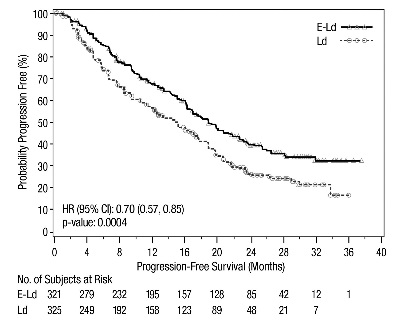
empliciti-fig1
The 1- and 2-year rates of PFS for EMPLICITI in combination with lenalidomide and dexamethasone treatment were 68% and 41%, respectively, compared with 57% and 27%, respectively, for lenalidomide and dexamethasone treatment.
Figure 2:   ELOQUENT-2 Overall Survival
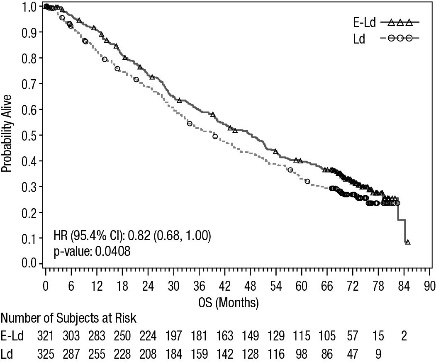
empliciti-fig2-s010
ELOQUENT-3 (NCT02654132)
The efficacy and safety of EMPLICITI in combination with pomalidomide and dexamethasone were evaluated in ELOQUENT-3, a randomized, open-label trial in patients with relapsed or refractory multiple myeloma.
Eligible patients were randomized in a 1:1 ratio to receive either EMPLICITI in combination with pomalidomide and low-dose dexamethasone or pomalidomide and low-dose dexamethasone. Treatment was administered in 4-week cycles until disease progression or unacceptable toxicity. EMPLICITI 10 mg/kg was administered intravenously each week for the first 2 cycles and 20 mg/kg every 4 weeks thereafter.
Prior to EMPLICITI infusion, dexamethasone was administered. Dexamethasone was administered on day 1, 8, 15 and 22 of each cycle. On weeks with EMPLICITI infusion, dexamethasone was administered as a divided dose: subjects 75 years or younger, an oral dose of 28 mg and an intravenous dose of 8 mg, and in subjects older than 75 years an oral dose of 8 mg and an intravenous dose of 8 mg. On weeks without an EMPLICITI infusion and in the control group, dexamethasone was administered in subjects 75 years or younger as an oral dose of 40 mg and in subjects older than 75 years as an oral dose of 20 mg dexamethasone was administered orally. Assessment of tumor response was conducted every 4 weeks.
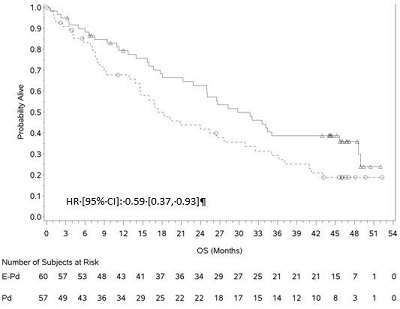
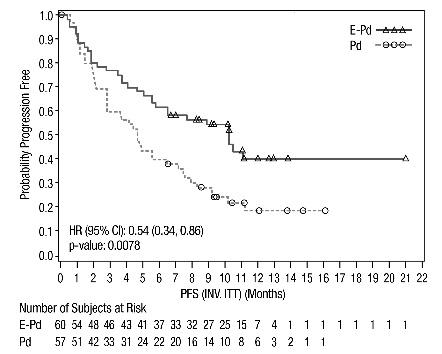
A total of 117 patients were randomized to receive treatment: 60 to EMPLICITI in combination with pomalidomide and low-dose dexamethasone and 57 to pomalidomide and low-dose dexamethasone.
Demographics and baseline disease characteristics were balanced between treatment arms. The median age was 67 years (range, 36-81); 62% of patients were 65 years or older; 57% of patients were male; whites comprised 77% of the study population, Asians 21%, and blacks 1%. The ECOG performance status was 0 in 44%, 1 in 46%, and 2 in 10% of patients, and ISS Stage was I in 50%, II in 38%, and III in 12% of patients. The chromosomal lab abnormalities as determined by FISH of del 17p and t(4;14) were present in 5% and 11% of patients, respectively. The median number of prior therapies was 3. Eighty-seven percent (87%) of patients were refractory to lenalidomide, 80% refractory to a proteasome inhibitor, 70% were refractory to both lenalidomide and a proteasome inhibitor. Prior therapies included stem cell transplant (55%), bortezomib (100%), lenalidomide (99%), cyclophosphamide (66%), melphalan (63%), carfilzomib (21%), and daratumumab (3%).
The efficacy of EMPLICITI was evaluated by progression-free survival (PFS) and overall response rate (ORR) as determined by the investigator. Efficacy results are shown in Table 13 and Figure 3. The median number of treatment cycles was 9 for the EMPLICITI group and 5 for the comparator arm with a minimum follow-up of 9.1 months.
A pre-planned final OS analysis was performed after at least 78 deaths occurred. The minimum follow-up was 45.0 months. A longer OS was observed in patients in the E-Pd arm compared to patients in the Pd arm. Efficacy results are presented in Table 13 and Figure 4.
Figure 3:   ELOQUENT-3 Progression-Free Survival
empliciti-fig3
Figure 4:    ELOQUENT-3 Overall Survival
empliciti-fig4-os
8HOW SUPPLIED/STORAGE AND HANDLING
EMPLICITI (elotuzumab) is white to off-white lyophilized powder available as follows:
Store EMPLICITI under refrigeration at 2°C to 8°C (36°F-46°F). Protect EMPLICITI from light by storing in the original package until time of use. Do not freeze or shake.
9PATIENT COUNSELING INFORMATION
Advise the patient to read the FDA-approved patient labeling
10EMPLICITI 300 mg Representative Packaging
NDC 0003-2291-11
Empliciti®
(elotuzumab)
for Injection
300 mg per vial
For intravenous Infusion Only

Bristol-Myers Squibb
empliciti-300mg.JPG
11EMPLICITI 400 mg Representative Packaging
NDC 0003-4522-11
Empliciti®
(elotuzumab)
for Injection
400 mg per vial
For intravenous Infusion Only

Bristol-Myers Squibb
empliciti-400mg-carton.JPG